

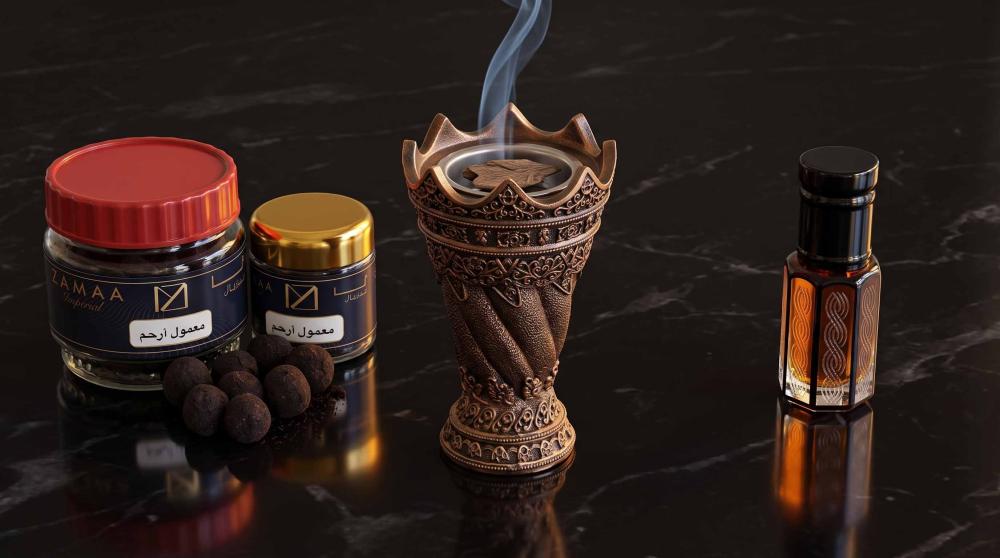
There's a reason walking into a well-scented Arabic home feels different from anywhere else. It's not one product. It's a layered approach that's been refined over centuries, and once you understand how it works, it's easy to do at home.
This guide covers the three main elements: bakhoor, oud wood, and dehn al oud. What each one is, where it goes, and how to use all three together.
The Three Elements of an Arabic Home Fragrance Ritual
Before anything else, here's the simple breakdown.
Bakhoor is blended incense, usually a mix of natural wood chips, oils, resins, and botanicals pressed or blended together. It's what most people burn daily in their homes. It fills large spaces quickly and leaves a warm, welcoming scent in fabrics and curtains.
Oud wood is raw agarwood chips burned on their own. No blending, no added ingredients. The scent is more complex, deeper, and more serious than bakhoor. It's the pure version of the experience.
Dehn al oud is the oil distilled from oud wood. You apply it directly to skin or fabric. It doesn't involve burning at all. It's the most personal of the three because it works with your body heat and stays close to you rather than filling the room.
Each one does a different job. Most people in the Gulf use all three, just at different times and for different purposes.
Bakhoor: Your Daily Home Fragrance
Bakhoor is the starting point for most homes. It's practical, it spreads easily, and it comes in enough variety that you can choose something that fits the mood of your space.
The way to use it is simple. Put a piece or a small amount on your electric burner or on a charcoal burner, let it heat up, and let the smoke do the work. It will fill the room in a few minutes.
A few things worth knowing:
The amount matters. One small piece is usually enough for a medium-sized room. More doesn't always mean better scent, it often just means more smoke.
The burner type changes the experience. An electric burner gives you a cleaner, more controlled scent with less smoke. A charcoal burner gives a heavier, more traditional experience. Neither is wrong, it depends on what you want.
Fabrics hold the scent. If you wave bakhoor smoke near curtains, cushions, or a thobe before guests arrive, the scent stays in the fabric long after the bakhoor stops burning. This is the easiest way to make a room smell good for hours without continuous burning.
The best rooms for bakhoor are reception areas, living rooms, and any space where you receive guests. It sets the tone the moment someone walks in.

Oud Wood: For When You Want Something More Serious
Pure oud wood is a different experience from bakhoor. It's slower, more complex, and more personal. You burn it the same way on a burner, but what comes out of it is not the same thing.
Oud wood takes time to open up. The first few minutes are the sharpest. As the burn settles, the scent deepens and the smoke softens. This is why you shouldn't judge a piece of oud by the first two minutes alone.
Different origins give you very different results. Cambodian oud is smoother and sweeter, good for everyday burning and for spaces where you want something warm and inviting. Indian oud is stronger and heavier, better for formal occasions or when you want a more commanding atmosphere. Both are available from Zamaa Imperial and both are worth having at home for different situations.
Oud wood is best used in smaller, more intimate spaces. A study, a bedroom, or a sitting room where you spend time personally. It's less about filling the whole house and more about creating a specific atmosphere in a specific place.
Dehn Al Oud: The Personal Layer
Dehn al oud doesn't go in the burner. It goes on you.
Apply a small amount to your pulse points, the wrists, behind the ears, and the base of the throat. Your body heat will push the scent outward slowly throughout the day. One or two drops is enough for most people.
But dehn al oud isn't only for the body. You can apply a small amount to the inside of your thobe collar, the edge of your abaya, or soft furnishings like a sofa cushion or a bedroom pillow. On fabric it lasts longer than on skin and the scent releases gently with movement and warmth.
This is the layer that makes a home feel truly personal. Guests don't just smell the room. They smell the care that went into it.

How to Use All Three Together
This is where it comes together. Here's a simple sequence that works well for receiving guests or for Eid and special occasions.
Start with bakhoor 30 minutes before guests arrive. Let it burn in the main reception area. The smoke settles into the curtains and cushions and creates a base scent in the room that stays even after you stop burning.
Switch to oud wood when guests arrive or shortly before. This shifts the atmosphere. The room goes from warm and welcoming to something deeper and more refined. It signals that this is a special occasion without saying a word.
Apply dehn al oud to yourself before greeting anyone. Wrists, neck, collar. When you shake hands or sit close to someone, they experience the personal layer of your scent. It's the most intimate part of the whole ritual.
Done in this order, the three elements build on each other. The room smells good before anyone arrives, it gets richer when they do, and you personally carry a scent that stays close even in conversation.
For Everyday Use
You don't need all three every day. Most people use bakhoor daily and keep oud wood and dehn al oud for when it matters more.
A simple daily routine that works: burn bakhoor in the morning after the house is aired, apply a small amount of dehn al oud before leaving for work or going out. That's it. The house smells welcoming when you return, and you carry your personal scent with you through the day.
Common Questions
What is the difference between bakhoor and oud?
Bakhoor is a blended incense product, usually containing wood, oils, and resins mixed together. Oud is raw agarwood burned on its own. Bakhoor is easier to use and more consistent. Oud is more complex and varies between pieces.
How often should I burn bakhoor at home?
Most people in the Gulf burn it daily, usually in the morning. There's no rule on frequency. It depends on your preference and how long the scent lasts in your specific space.
Can I use dehn al oud on furniture?
Yes, on natural fabric surfaces. Sofas, cushions, curtains, and bedding all hold the scent well. Avoid applying directly to polished wood or leather surfaces as the oil can leave marks.
Which oud is best for home use?
For daily home burning, Cambodian oud is the easier and more pleasant choice for everyone in the space. For special occasions and a more formal atmosphere, Indian oud is the right call.
Is it safe to burn bakhoor or oud indoors every day?
With proper ventilation it's fine. Open a window or door during burning and for a short time after. Avoid burning in very small enclosed spaces with no airflow, especially around young children.